Photography
Photographing Zhangjiajie — light, mist, platforms and the drone question
Three thousand quartz-sandstone towers, resident mists and terraces hanging over kilometre-deep views: Zhangjiajie may be China’s most photogenic landscape. It is also a place where the difference between a snapshot and a portfolio image is timing, positioning and weather-reading. Here is the working photographer’s guide — including the drone rules you must not learn the hard way.
Short answer
Shoot the first two hours after gate opening and the last before dusk; chase the clearing after rain, when pillars float in torn cloud — the park’s signature condition. The Yuanjiajie platforms (the “Avatar” viewpoint area) and the Tianzi Mountain terraces are the headline stages; Yangjiajie rewards those who walk further. Tripods are generally workable on platforms outside peak crush, though rules can vary. Drones are strictly regulated in the scenic areas — permits are required and enforcement is real: never fly without checking current rules first.
Key facts
- Signature condition
- Clearing mist after rain — stone towers floating in moving cloud
- Best light
- First two hours after opening; the hour before dusk
- Headline stages
- Yuanjiajie (“Avatar” viewpoint area), Tianzi Mountain terraces, Tianmen cliff walks
- Named for a film
- The park renamed a pillar “Avatar Hallelujah Mountain” in 2010
- Tripods
- Generally tolerated on platforms; crowded rails favour clamps and monopods — rules can vary
- Drones
- Strictly regulated in scenic areas — permits required; never fly without checking current rules
- Best seasons
- Autumn for clarity and colour; any season in the hours after rain
What makes Zhangjiajie photographically unlike anywhere else
The Wulingyuan World Heritage area contains, by UNESCO’s count, more than three thousand quartz-sandstone pillars and peaks — a vertical forest of stone rising from subtropical woodland, threaded by ravines and streams. No other landscape on earth offers this density of freestanding towers, which is why the imagery became globally famous and why, in 2010, the park leaned into the association by renaming one pillar “Avatar Hallelujah Mountain”.
For the photographer the terrain solves composition problems by the dozen — natural layering, receding planes, scale markers — and creates one of its own: from the plateau rails, everyone shoots the same postcards. The escapes are time (edges of the day), weather (mist), and position (the platforms beyond the bus-stop clusters). Everything below serves those three.
The platforms that earn their fame
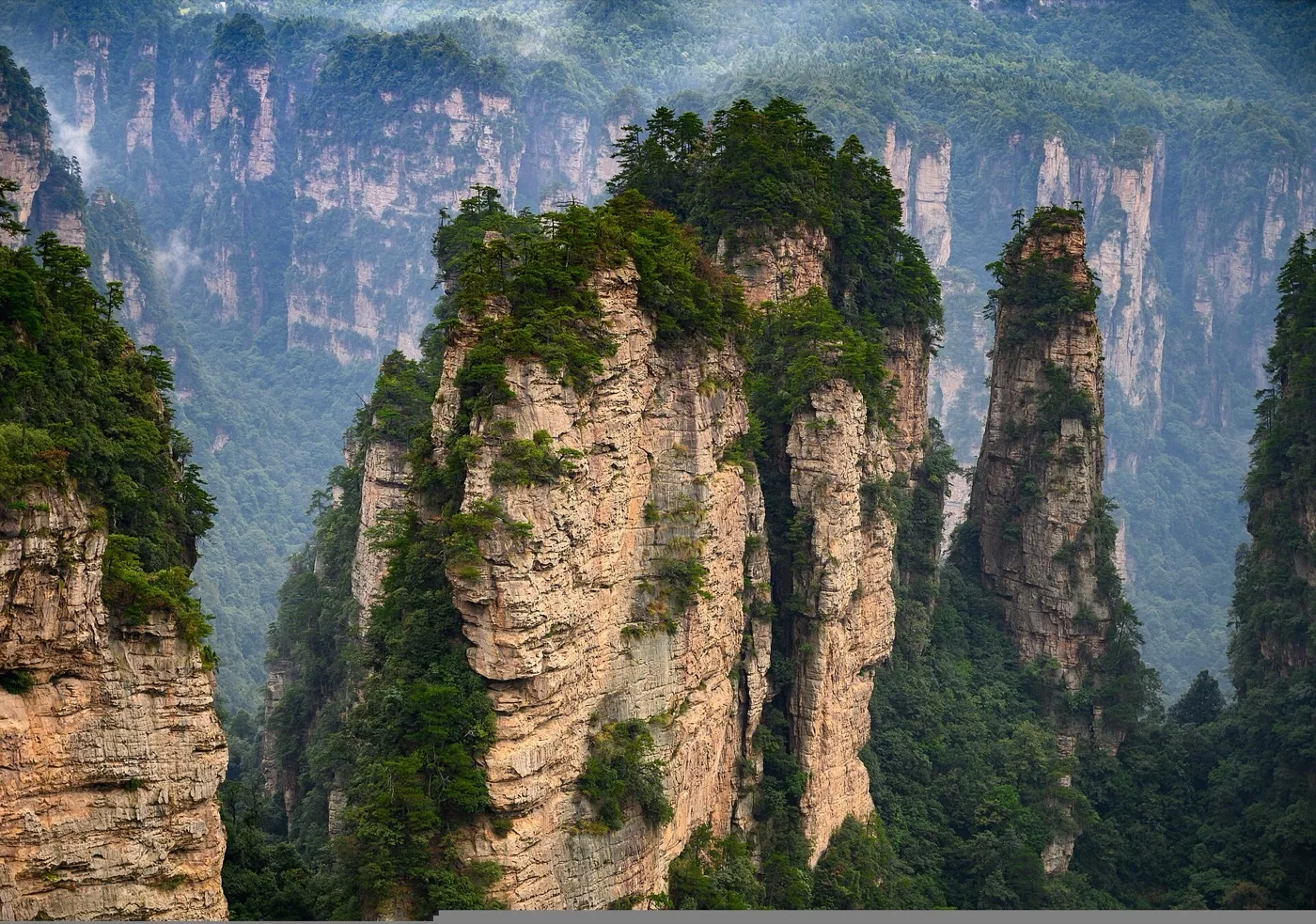
Yuanjiajie is the Avatar stage: the plateau rim path passes the Hallelujah pillar itself and the “First Bridge Under Heaven” natural arch, with railed platforms staring straight into the pillar forest at eye level — frames where towers stack ten deep into haze. One honest note on names: platform signage wanders between Chinese poetic names, English translations and marketing labels, and blogs contradict each other; navigate by position along the rim path, not by name, and you will find every composition regardless.
Tianzi Mountain is the high balcony — broader, loftier terraces looking down onto fields of peaks, at their best in early light and cloud-sea conditions; the viewing areas around the summit hold the park’s grandest panoramas. Yangjiajie, the quiet west, trades crowds for edge: the natural-wall formations and ridge paths photograph like nowhere else in the park, at the price of stairs and sweat. And Tianmen is its own genre — the cableway ride shoots over city and cliffs, and the summit sky-walks frame the arch and the switchback road a thousand metres below.
Mist: reading it, chasing it
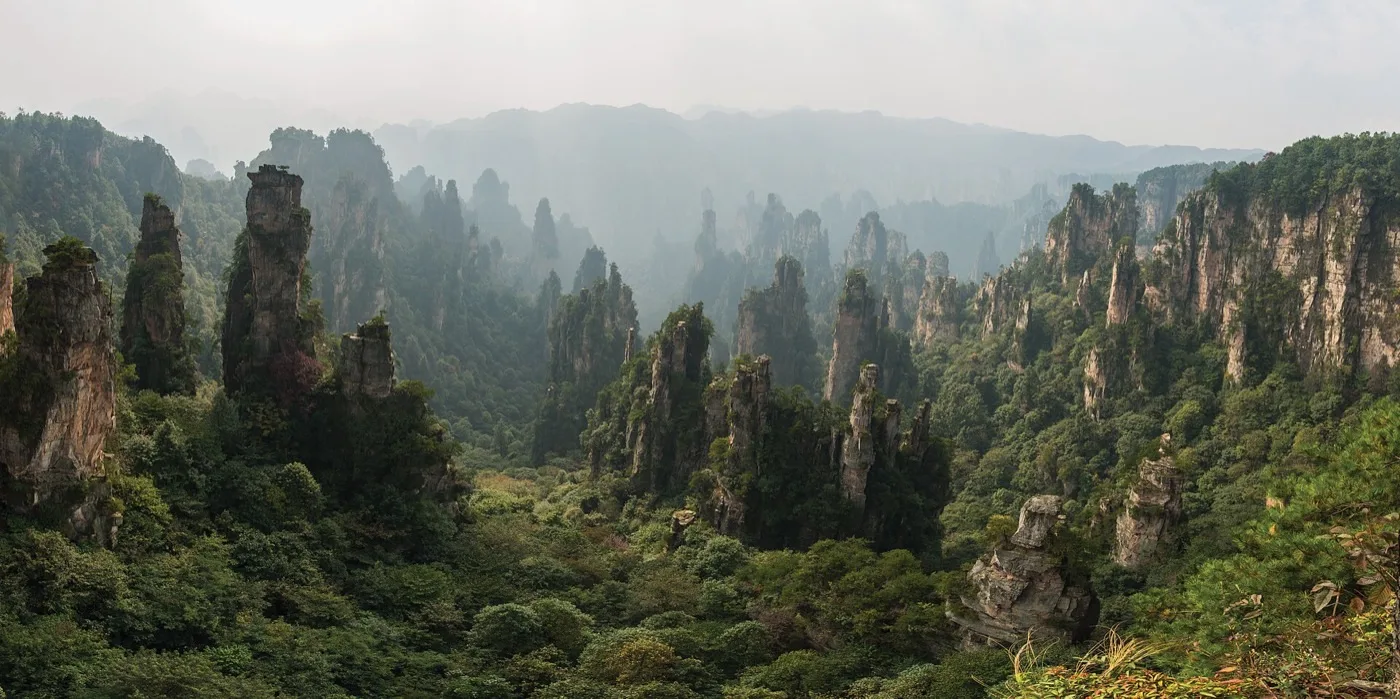
The floating-mountain photographs that made Zhangjiajie famous are weather photographs: valley fog or post-rain cloud sitting below the plateau rims, pillar tips breaking through. The pattern to internalise — overnight and morning valley mist burns upward and off by mid-morning on stable days; after daytime rain, cloud regenerates in the ravines and tears off the towers in ribbons as it clears. Both windows are short, mobile and worth sprinting for.
Practical playbook: a rainy forecast with a clearing trend is a green light, not a cancellation — position yourself at a rim platform for the last hour of rain and wait. Grey flat mornings are Tianzi mornings (height above the cloud); thin fast-moving cloud favours Yuanjiajie’s eye-level frames, where pillars appear and vanish by the minute. Total whiteout is real and happens; when it does, descend and shoot the stream — mist among trees and water is its own picture.
Golden hours and the sunrise problem
Zhangjiajie’s light follows mountain logic: low sun raking across the pillar fields gives modelling and depth, midday flattens everything into haze, and the first two hours after gates open are both the best light and the emptiest platforms — the day’s double win. Dusk is trickier: park transport winds down around closing, so late golden hour is a game of knowing your exit — last cableway and bus times — and shooting as close to them as nerve allows.
True sunrise — being on a rim platform at first light — is the park’s hardest logistics problem, because gates and transport open on schedules, not with the sun. The honest routes to it: base in Wulingyuan and be at the gate before opening in the short-daylight months when opening hours and sunrise converge; or accept “early light” rather than “first light” in high summer. Hours vary by season and section — verify current opening times close to your dates, and build the morning backwards from the first bus and first cableway, not from the sunrise table.
Gear, tripods and platform etiquette
The kit that earns its weight: a telephoto zoom (the classic 70–200 range and longer) for compressing pillar stacks — more valuable here than any wide lens; a mid-range zoom for the platforms; polariser for post-rain glare; weather protection for everything, because humidity and drizzle are co-photographers; and lens cloths in quantity. Condensation on glass when moving between cool cableway cabins and humid air is a constant — budget minutes for lenses to acclimatise.
Tripods: generally tolerated on viewing platforms, and in quiet hours nobody minds; in crowd-crush conditions staff may ask them down, and rules can vary by section and season — read the platform, comply immediately when asked, and favour a clamp, monopod or high-ISO discipline on busy rails. Etiquette is simple and repays itself: never occupy the prime rail through others’ moments for a timelapse, and mind bags — railings overhang very long drops. Commercial and wedding shoots with crews are a different category that may need park permission; enquire ahead through official channels.
Drones: read this before you pack one
The blunt version: do not assume you can fly in Zhangjiajie. China regulates drones nationally — real-name registration applies, and rules cover weight classes and no-fly zones — and the scenic areas layer their own strict restrictions on top: flight over the crowded core areas is generally prohibited without specific permission, enforcement exists, and confiscations and fines are documented experiences, not rumours. Cableways, crowds and protected-area status each independently justify the restrictions.
If aerial imagery matters to your project, pursue permission properly: current national rules, then the specific scenic area’s current policy through official channels, in advance and in writing — requirements change and no blog, including this one, is a substitute. If you are a casual flyer, the honest advice is to leave the drone at home and spend the weight on a longer lens: the platforms already stand where the drone shots live.
Shooting with a guide
Photography is where a private local guide converts most directly into images: we know which platform faces the light at 08:00 versus 17:00, where the crowd-free rail is when the main one is six deep, what the mist is doing on the mountain right now via colleagues already up there, and how to re-sequence a whole day the moment a clearing trend appears. We carry the timing burden — first buses, last cableways, quota windows — so you carry only the camera.
A dedicated photo-focused day costs the same ¥1,000 as any private guide day (per group of 1–8); tell us on WhatsApp (+7 904 210 4044) that photography leads the trip and we will build the plan around light and weather rather than the standard loop — and honestly warn you when your dates’ conditions favour valleys over panoramas.
Frequently asked questions
Where exactly is the “Avatar viewpoint”?
The Avatar Hallelujah Mountain pillar stands off the Yuanjiajie rim path, signposted from the Bailong Elevator top station — several platforms along that path frame it. Names on signs vary; the rim path position is what matters.
Can I fly a sub-250 g drone without a permit?
Weight class does not exempt you from scenic-area restrictions — the parks’ no-fly rules apply regardless of drone size, and national registration rules have their own thresholds. Check current national and park-specific rules before even packing it; when in doubt, do not fly.
Is sunrise photography inside the park actually possible?
Within limits: gates and transport open on schedule, so true first light is achievable mainly in seasons when late sunrise meets early opening. Otherwise you are shooting the first two hours of light, which in this landscape is still exceptional.
What is the best season for photography?
Autumn for visibility, colour and stable light; any season delivers the signature mist shots in the hours after rain. Winter snow days are the rarest prize; summer offers storm drama at the cost of haze and crowds.
Are tripods banned?
Not generally — they are widely used on platforms in quiet hours. Expect staff intervention only in crowd-crush conditions, and treat any posted or spoken instruction as final. A clamp or monopod covers the busy-rail scenario.
Sources
Planning a Zhangjiajie trip?
Send us your dates and questions on WhatsApp. A licensed local guide answers personally — usually within a few hours (08:00–22:00 China time).